

-
Biomethane Market Forecast Highlights Strong Potential for Renewable Natural Gas
The global biomethane market is gaining momentum as countries prioritize renewable energy sources, domestic fuel production, and lower-carbon alternatives to conventional natural gas. Biomethane, also known as renewable natural gas (RNG), is produced by upgrading biogas generated from organic materials such as agricultural residues, animal manure, sewage sludge, and food waste. Its applications across transportation, industrial heating, and power generation are creating new opportunities for renewable gas producers.
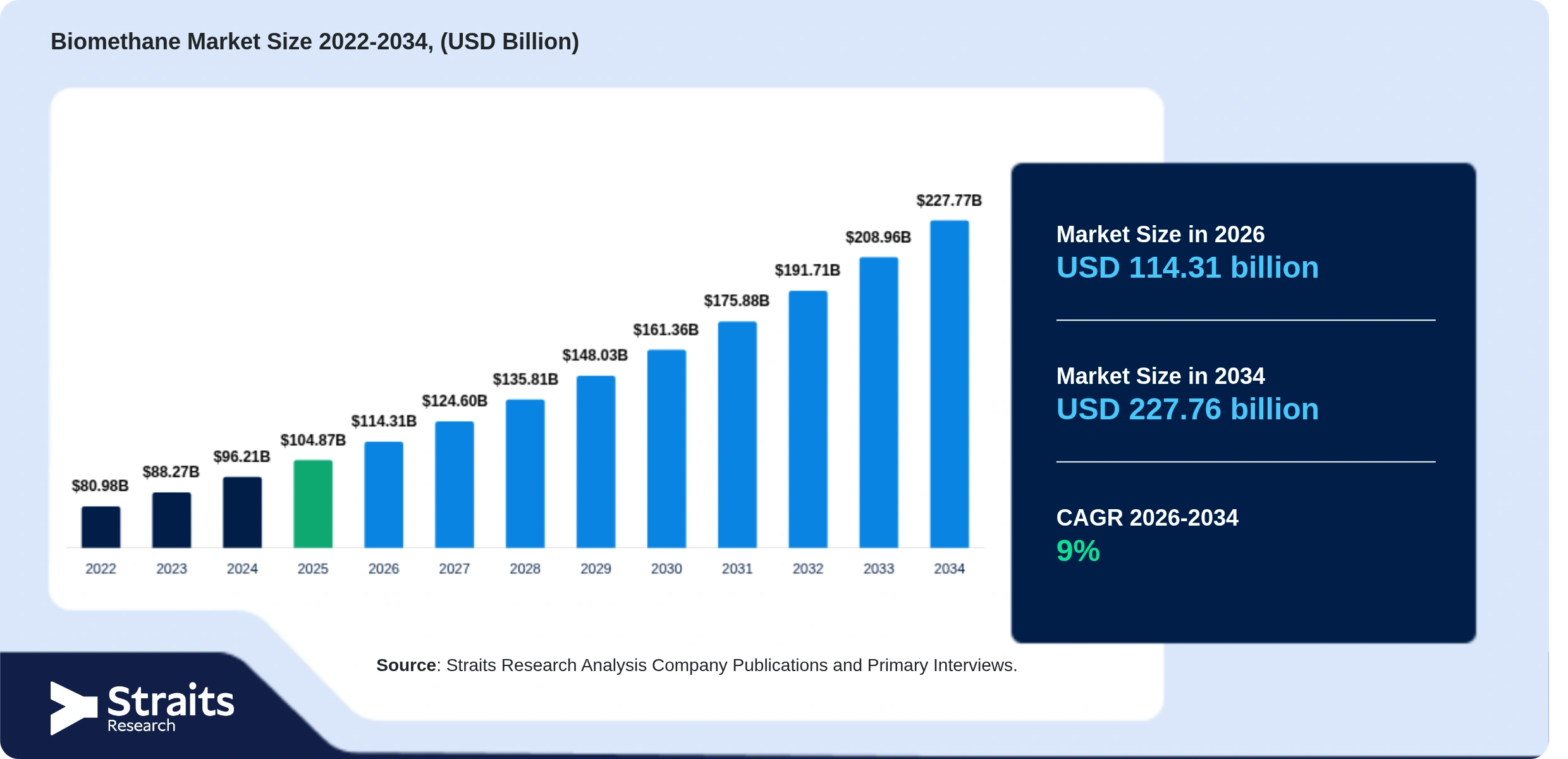
According to Straits Research, the global biomethane market size was valued at USD 104.87 billion in 2025 and is projected to grow from USD 114.31 billion in 2026 to USD 227.77 billion by 2034, registering a CAGR of 9% during the forecast period (2026–2034).
Key Market Highlights:
Market Size (2025): USD 104.87 billion
Market Size (2026): USD 114.31 billion
CAGR (2026–2034): 9%
Forecast Year: 2034
Projected Market Size (2034): USD 227.77 billion
Dominant Region: Europe
Fastest-Growing Region: North AmericaMarket Overview
Biomethane provides a renewable substitute for conventional natural gas while making productive use of biodegradable waste. Anaerobic digestion remains the established production method, converting organic materials into biogas that undergoes purification before pipeline injection or use as transportation fuel. The recovery of biogenic carbon dioxide also creates additional value from production facilities.Key Market Growth Drivers
Demand for renewable natural gas in transportation is encouraging fleet operators to consider Bio-CNG and Bio-LNG for commercial vehicles. The European Biogas Association’s 2025 Statistical Report identified transportation as accounting for 25% of biomethane use across reported European end-use categories.Industrial demand for low-carbon thermal energy also creates opportunities for producers supplying biomethane to manufacturing, chemical processing, and food processing facilities. Industry accounted for 18% of reported European biomethane use, highlighting its importance as an end-use application.
Market Challenges
Biomethane production requires reliable organic feedstock supplies, efficient anaerobic digestion facilities, and advanced upgrading technologies. Maintaining consistent methane recovery and meeting pipeline-quality requirements can add operational complexity. Infrastructure requirements for gas purification, storage, and grid injection also influence project development.Market Opportunities
Agricultural waste utilization offers opportunities for biomethane producers to convert crop residues and farming by-products into renewable fuels. Commercial establishments, including hotels, restaurants, and retail facilities, also represent potential customers seeking cleaner energy for heating and cooking applications.Segment Analysis
Organic household waste dominated the feedstock segment with a 21.4% share in 2025, while agricultural waste is projected to record the highest CAGR of 8.34%.Anaerobic digestion led the production method segment with a 54% share. Gasification is expected to register the fastest CAGR of 8.76%.
The industrial segment accounted for 49.5% of the market in 2025. The commercial segment is projected to register a CAGR of 7.72%. Automotive applications are also expected to record a CAGR of 8.65%.
Regional Analysis
Europe dominated the global biomethane market with a 39.6% share in 2025. Government incentives, renewable gas infrastructure, and established biogas production capabilities support regional adoption. The UK’s Green Gas Support Scheme, including its extended plant commissioning deadline of March 2030, provides additional opportunities for eligible projects.North America is projected to be the fastest-growing region, registering a CAGR of 9.18%. Renewable fuel incentives in the U.S. and renewable gas blending targets in Canada are encouraging investment in production and pipeline infrastructure.
Asia Pacific is projected to register a CAGR of 8.46%, with renewable gas initiatives in China, Japan, and India supporting regional development.
Competitive Landscape
The biomethane market features renewable gas developers, biogas technology providers, plant operators, and engineering companies. Key market participants include:PlanET Biogas Global GmbH
CNG Services Ltd.
VERBIO SGN
EnviTec Biogas AG
Future Biogas Ltd.Companies focus on upgrading technologies, feedstock integration, production efficiency, and partnerships with agricultural businesses and energy utilities.
Recent Developments
Government initiatives continue to create opportunities for biomethane production and distribution. India’s Compressed Biogas Blending Obligation establishes blending requirements of 1% in FY2025–26, 3% in FY2026–27, and 4% in FY2027–28. These targets encourage investment in domestic compressed biogas facilities and distribution infrastructure.Future Outlook
The biomethane market is expected to benefit from renewable fuel adoption, agricultural waste utilization, and government-backed energy transition initiatives. Demand from transportation, industrial manufacturing, and commercial establishments is likely to create additional opportunities for producers. Advances in biogas upgrading and alternative production methods will also influence the industry’s development through 2034.Click Here to Access the Comprehensive Report: https://straitsresearch.com/report/biomethane-market
About Straits Research
Straits Research is a global market intelligence and consulting company providing industry insights, market analysis, and strategic research solutions. The company delivers comprehensive market reports and data-driven insights that help businesses understand industry developments, identify emerging opportunities, and make informed strategic decisions.
Media
Sorry, no items found.