

-
Biofeedback Instrument Market: Brainwave Devices Lead by Type
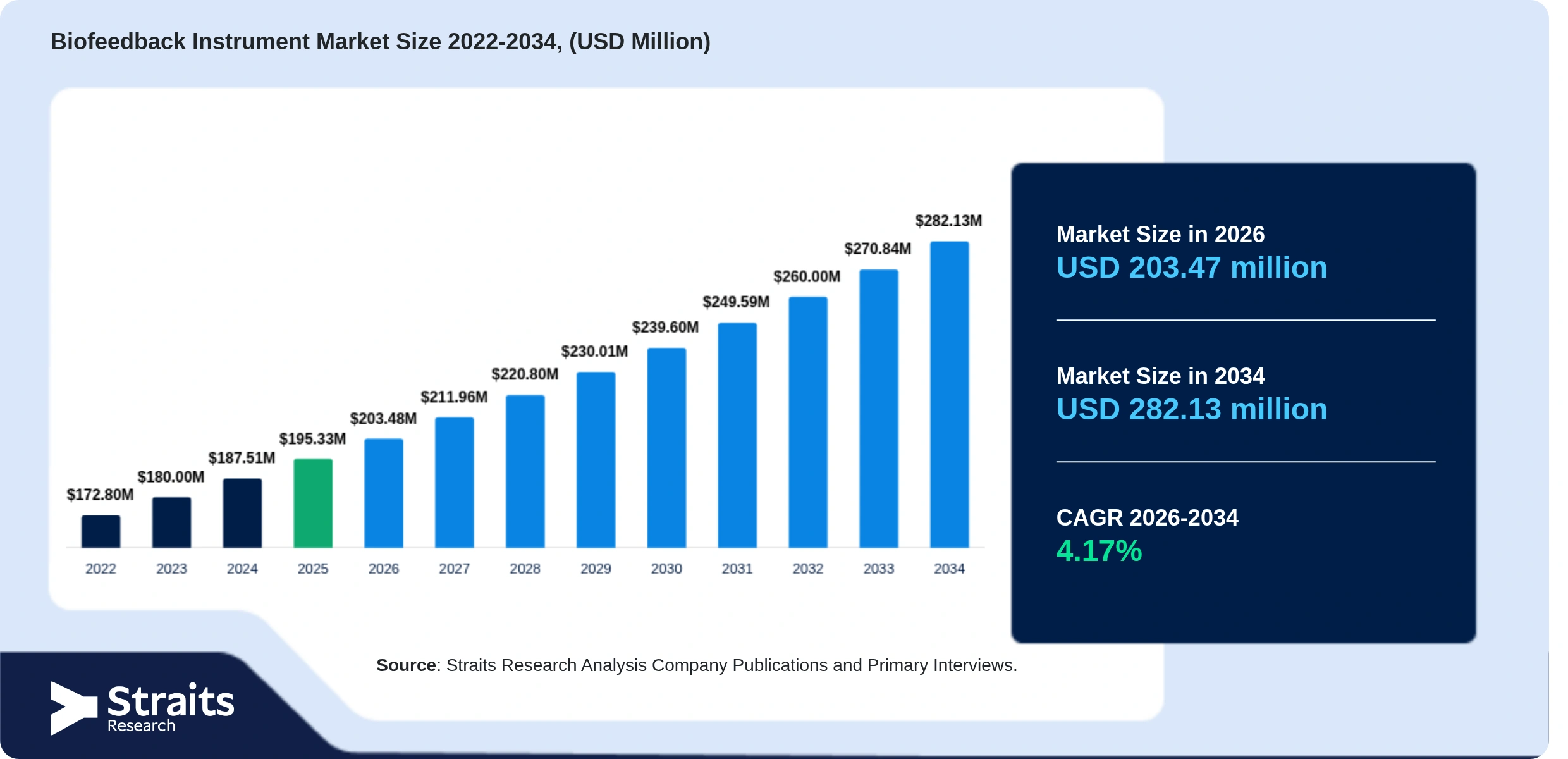
The global biofeedback instrument market size was valued at USD 195.33 million in 2025 and is projected to grow from USD 203.48 million in 2026 to USD 282.13 million by 2034, registering a CAGR of 4.17% during the forecast period (2026–2034). North America dominated the market with a 38.25% share in 2025, while Europe is projected to record the fastest growth at a CAGR of 7.86%.
Key Market Highlights:
Market Size (2025): USD 195.33 million
Market Size (2026): USD 203.48 million
CAGR (Forecast Period): 4.17% (2026–2034)
Forecast Year: 2034
Projected Market Size (2034): USD 282.13 million
Dominant Region: North America
Fastest Growing Region: EuropeMarket Overview
Biofeedback instruments are non-invasive devices that measure physiological activities such as heart rate, muscle tension, skin temperature, sweat response, and brainwave patterns. Sensors collect these signals and provide real-time feedback through visual displays or audio cues, helping users understand and regulate their bodily responses.These instruments include electromyography (EMG), heart rate variability (HRV), galvanic skin response (GSR), thermal biofeedback, EEG neurofeedback, and pressure biofeedback systems. Their applications span stress management, relaxation training, physical rehabilitation, muscle control, and neurological training.
Growth Drivers
The use of biofeedback in stress management programs is supporting market development across hospitals, mental health clinics, and wellness centers. The World Health Organization reported in 2025 that approximately 1.1 billion people worldwide were living with mental health conditions, highlighting the importance of accessible mental healthcare and complementary treatment approaches.The preference for non-pharmacological pain management is another contributing factor. The WHO’s 2025 Global Status Report on Neurological Disorders states that neurological conditions affect more than 3 billion people worldwide. Biofeedback instruments, particularly EMG-based systems, are used in rehabilitation programs to help patients improve muscle control and relaxation.
Challenges
The need for trained professionals to operate specialized instruments and interpret physiological measurements can limit adoption in smaller healthcare facilities. Equipment costs, differences in device accuracy, and the need for consistent patient participation may also affect the use of biofeedback across clinical and home-based settings.Opportunities
Portable and connected biofeedback devices offer opportunities for manufacturers targeting home-based rehabilitation and personal wellness. Wearable sensors and HRV-based systems also create opportunities for personalized monitoring and guided stress management. Smartphone integration and remote monitoring features can help manufacturers reach patients beyond traditional clinical settings.Segment Analysis
By type, brainwave instruments dominated the market with a 31.6% share in 2025, reflecting their use in neurofeedback, cognitive training, and stress management. Heart rate instruments are projected to record the second-highest CAGR of 7.08%, supported by applications in relaxation training and cardiovascular biofeedback.By application, hospital use led with a 39.8% share in 2025 due to clinical monitoring and supervised rehabilitation programs. Home use is projected to register the fastest CAGR of 7.74%, supported by portable devices and convenient access to personal wellness and relaxation training.
Regional Analysis
North America dominated the market with a 38.25% share in 2025, supported by mental healthcare initiatives and established rehabilitation services in the U.S. and Canada. Europe is projected to be the fastest-growing region, with a CAGR of 7.86%, supported by healthcare digitalization and mental health infrastructure initiatives in the UK and Germany. Asia Pacific is projected to register a CAGR of 7.32%, with rehabilitation and digital mental healthcare initiatives in Japan, China, and India contributing to regional opportunities.Competitive Landscape
The biofeedback instrument market is moderately fragmented, with leading companies accounting for an estimated 25–30% of global market share. Competition centers on measurement accuracy, clinical reliability, software integration, and practitioner support. Smaller providers focus on specialized applications, flexible software features, and cost-effective systems.Key Companies:
Thought Technology Ltd.
QX World Ltd.
Petra Nicoll LLC
Laborie, Inc.
Quantum World Vision BiofeedbackRecent Developments
Wearable sensor integration and HRV-based training are shaping product development. The U.S. National Institutes of Health’s All of Us Research Program includes more than 68,000 participants sharing Fitbit data, including heart rate, sleep, and physical activity measurements. A 2025 randomized controlled trial involving 60 women with a history of breast cancer also found that a four-week smartphone-based HRV biofeedback intervention improved sleep quality and reduced anxiety.Click Here to Access the Comprehensive Report : https://straitsresearch.com/report/biofeedback-instrument-market
Future Outlook
The biofeedback instrument market is expected to benefit from the wider use of non-invasive stress management, rehabilitation, and home-based wellness solutions. Wearable monitoring, HRV training, and connected healthcare platforms are likely to remain important areas of development as manufacturers address clinical and personal monitoring requirements.About Straits Research
Straits Research is a global market intelligence and consulting company that provides industry analysis, market insights, and strategic research across diverse sectors. The company helps organizations understand market developments, identify opportunities, and make informed business decisions through data-driven research and consulting services.
Media
Sorry, no items found.