

-
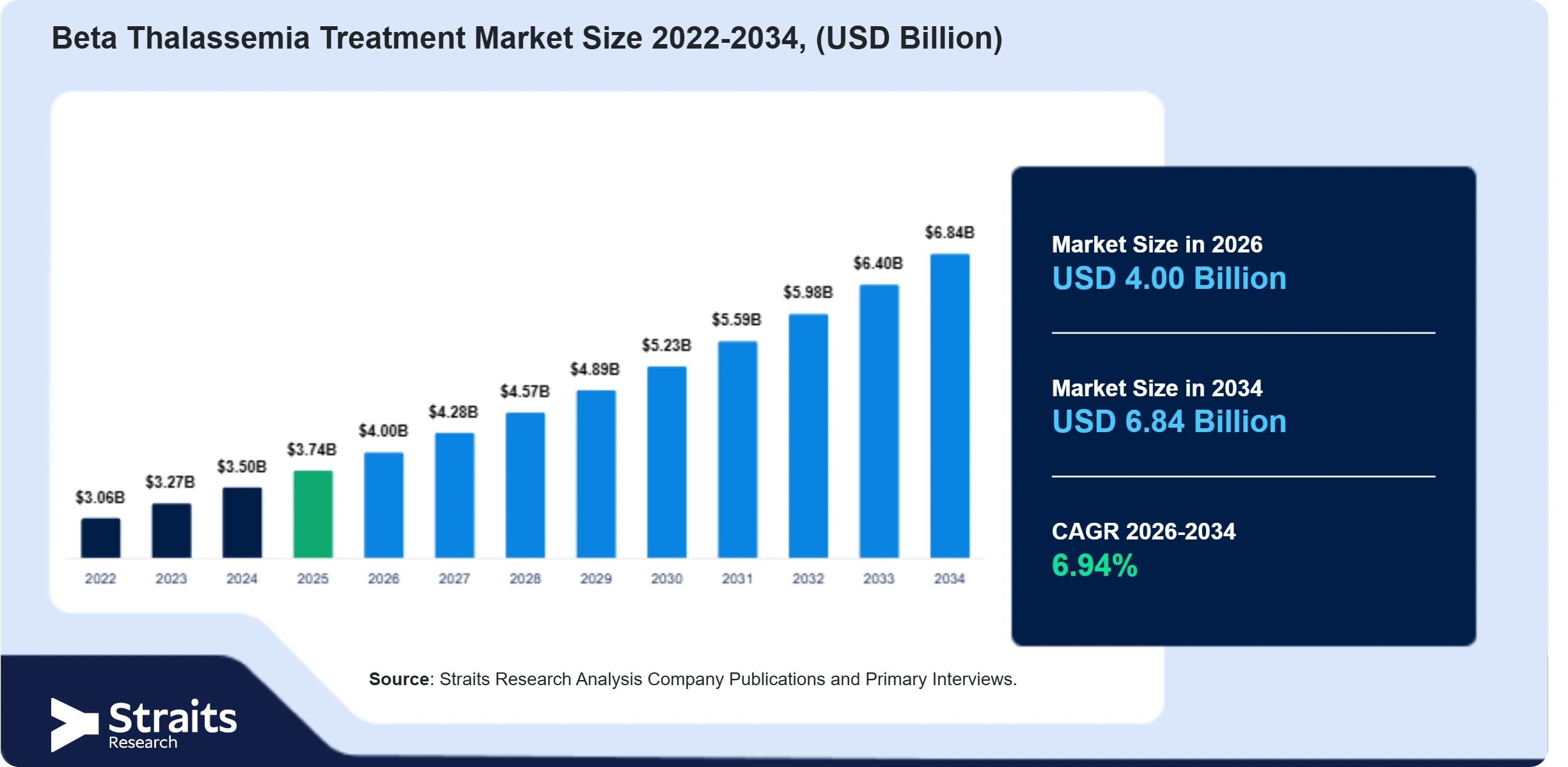
Beta Thalassemia Treatment Market to Grow from USD 3.74 Billion in 2025 to USD 6.84 Billion by 2034
According to Straits Research, the global beta thalassemia treatment market size was valued at USD 3.74 billion in 2025 and is projected to grow from USD 4.00 billion in 2026 to USD 6.84 billion by 2034, registering a CAGR of 6.94% during the forecast period (2026–2034). Asia Pacific held the largest market share of 37.2% in 2025, while the Middle East and Africa is identified as the fastest-growing region.
Market Size 2025: USD 3.74 Billion
Market Size 2026: USD 4.00 Billion
CAGR (Forecast Period): 6.94%
Forecast Year: 2034
Projected Market Size: USD 6.84 Billion
Dominant Region: Asia Pacific
Fastest Growing Region: Middle East and Africa
Market Overview
Beta thalassemia is an inherited blood disorder that reduces the body’s ability to produce normal hemoglobin. Treatment options include regular blood transfusions, iron chelation therapy, disease-modifying agents, gene therapy, erythroid maturation drugs, and supportive supplements. These treatments help manage anemia, control iron overload, and reduce complications associated with the condition. Hospitals, specialty clinics, and transfusion centers play an important role in long-term patient care.Growth Drivers
The need for regular treatment among patients with transfusion-dependent beta thalassemia supports the use of blood transfusion services and iron chelation medicines. Wider access to specialized hematology care also improves diagnosis and long-term disease management. Advances in gene editing and disease-modifying therapies are creating additional treatment options for eligible patients and supporting investment in advanced therapies.Market Challenges
The high cost of advanced therapies can limit access to gene-based treatments, particularly in healthcare systems with restricted reimbursement. Stem cell transplantation also requires a compatible donor, specialized clinical facilities, and close patient monitoring. Long-term dependence on blood transfusions and the risk of iron overload create further care requirements for patients and healthcare providers.Market Opportunities
Outcome-based reimbursement models offer an opportunity to improve access to high-cost gene therapies by linking payments to treatment outcomes over time. Pharmaceutical companies can also explore RNA-based approaches that target iron regulation and ineffective red blood cell production. Continued research into gene editing, erythroid maturation agents, and disease-modifying medicines can create new treatment options for patients with different forms of beta thalassemia.Segment Analysis
By treatment type, blood transfusion therapy held a market share of 28.4% in 2025, supported by its established role in managing severe anemia among patients with beta thalassemia. Gene therapy is set to record a CAGR of 12.64% during the forecast period, supported by advances in genetic modification and the development of potentially curative treatment options. Iron chelation therapy, disease-modifying agents, erythroid maturation drugs, and folic acid and supportive supplements also form part of the treatment landscape.By type, transfusion-dependent beta thalassemia held a market share of 58.3% in 2025. These patients require regular red blood cell transfusions to maintain hemoglobin levels, which supports continued use of transfusion services and related medicines. Non-transfusion-dependent beta thalassemia is set to record a CAGR of 7.58%, supported by improved diagnosis and greater recognition of complications such as iron overload.
By end user, hospitals held a market share of 46.7% in 2025 due to their role in transfusion procedures, specialist consultations, and the management of severe cases. Homecare settings are set to record a CAGR of 8.34%, supported by the use of oral iron chelation medicines and remote patient monitoring. Specialty clinics and transfusion centers also contribute through dedicated hematology services and regular treatment programs.
Regional Analysis
Asia Pacific held the largest share of the beta thalassemia treatment market in 2025, accounting for 37.2% of global revenue. The region’s patient population, need for regular transfusion services, and access to specialized treatment support its position. The Middle East and Africa is identified as the fastest-growing region, supported by the need for improved diagnosis, blood transfusion access, and specialized care for inherited blood disorders.Competitive Landscape
The beta thalassemia treatment market includes pharmaceutical companies and biotechnology firms that develop gene therapies, disease-modifying drugs, and supportive treatments. Key players include Novartis AG, Bristol Myers Squibb, bluebird bio, Vertex Pharmaceuticals, and CRISPR Therapeutics. Companies compete through clinical research, regulatory approvals, treatment efficacy, patient access programs, and the development of therapies that can reduce long-term treatment dependence.Recent Developments
July 2026: Vertex Pharmaceuticals received U.S. FDA approval for the expanded use of CASGEVY in patients aged 2 years and older with transfusion-dependent beta thalassemia. The approval broadened the eligible patient population for the gene-editing therapy.May 2026: The European Commission granted marketing authorization for Agios Pharmaceuticals’ PYRUKYND (mitapivat) for adults with transfusion-dependent and non-transfusion-dependent alpha- or beta-thalassemia, adding a new treatment option for eligible patients in Europe.
Click to Read the Complete Insights & Report: https://straitsresearch.com/report/beta-thalassemia-treatment-market
Future Outlook
The beta thalassemia treatment market is expected to benefit from wider access to specialized care and continued advances in gene-based therapies. Established approaches such as blood transfusions and iron chelation are likely to remain important, while gene therapy and disease-modifying medicines may broaden treatment options. Improved reimbursement models and patient access programs can also support the adoption of advanced therapies across regional healthcare systems.About Straits Research
Straits Research is a market intelligence company that provides global business information and consulting services. The company offers market reports, industry analysis, and strategic insights to help organizations understand market trends, assess opportunities, and make informed business decisions.
Media
Sorry, no items found.