
-
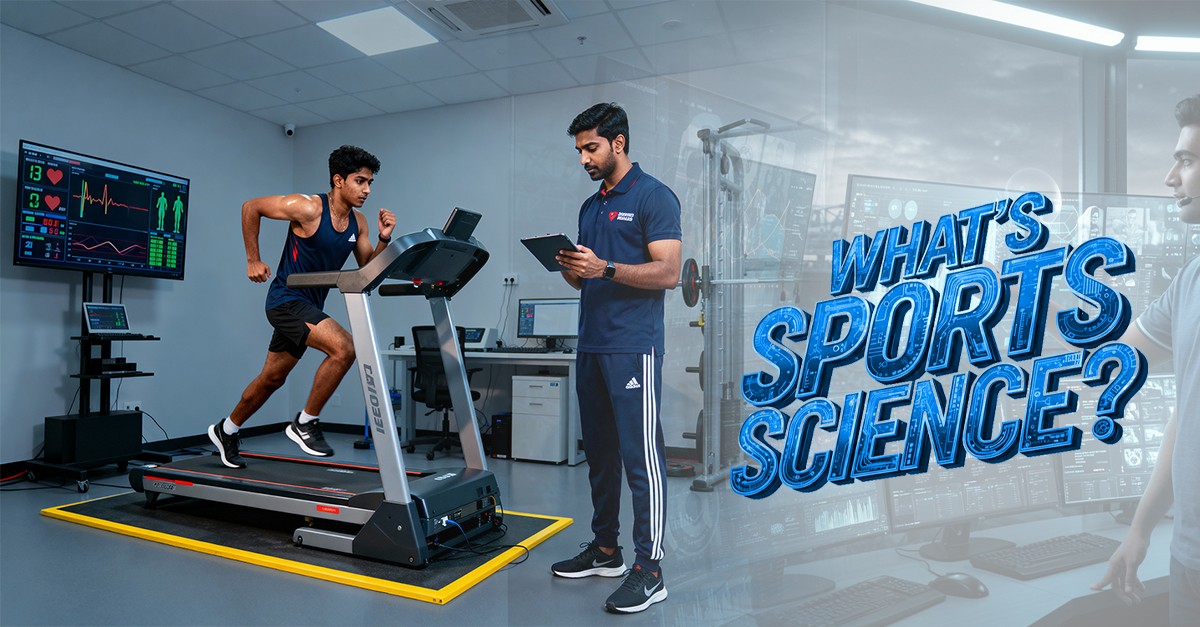
Athletic performance isn’t just achieved on the field. There’s a lot of groundwork that goes behind improving a player’s physique, diet as well as physical & mental fitness, before they can perform at the highest level without much hassle.
And there’s a perfect field of study that aims at optimizing performance in this way: Sports Science.
What is Sports Science?
Sports Science is the interdisciplinary study of how the human body and mind respond to exercise, training, and performance. It merges physiology, biomechanics, nutrition, psychology, data analytics, and technology to enhance every aspect of an athlete’s preparation — from nutrition and recovery to mindset and movement.While regular exercising and diet maintenance is still important, Sports Science goes a few steps forward to sophisticate these processes with nutritional evaluation, biomechanical analysis, and correcting exercise forms using physiology.
All in all, Sports Science is a vast field that can completely change an athlete’s on-field performance and shape them into a world champion.
So, let’s dive deep into the realm of Sports Science and understand its importance, verticals, and how one can pursue a promising career in this evolving field.
Why is Sports Science Important?
Elevating performance using Sports Science has become increasingly important as athletes are chasing every goal, every meter and every millisecond of performance to become the best.Athletes nowadays need to focus on their fitness levels come what may with the global competition standards levelling up. While increasing intensity and frequency is a plausible solution, it can easily cause issues.
Overtraining or ineffective training patterns is a crucial factor why some athletes are often injury-prone. Working out with the wrong exercise form, pushing your body beyond the natural limits, and consuming the wrong diet are all reasons behind players getting injured, not performing to their expected benchmark and generally facing health issues.
Sports Science helps in overcoming all these aspects and shaping world champions. The multiple verticals of this fascinating sector are the real game changers in uplifting any athlete.
Verticals of Sports Science
Exercise Physiology
Exercise Physiology is the study of physical activity during exercising and how it affects the body’s muscles, organs & tissues. This impact is analyzed at the cellular level, at the skeletal level and even at the cognitive level.While exercising and its benefits are widely endorsed by everyone, the main purpose of exercise physiology is understanding its effect on the body, how it can impact our genetics, cell and tissue health, organ system functioning and overall bodily function.
It has been found that exercise physiology helps in reducing the risk of heart diseases, diabetes, and many other chronic ailments.
For athletes, exercise physiologists play a crucial role. They analyze the player’s complete routine, body type, medical history before creating a personalized training regimen.
Wearable biosensors allow physiologists to track real-time metabolic data and fine-tune training programs remotely.
Read More: Sports and Exercise Physiology in India Decoded by Dr. Pralay Majumdar
Sports Science Verticals
Strength & Conditioning
Strength & Conditioning is one of the most important and specialized fields in Sports Science, and a pivotal aspect for any athlete’s development.It helps athletes enhance their physical performance on the field and reduce injury risk. Any player wanting to play for a long time in his/her career needs to uplift their fitness levels by working with strength & conditioning specialists.
Strength & Conditioning helps to improve the athlete’s strength, power, endurance, agility, speed and flexibility. This entire process is different from traditional training as strength & conditioning workout regimens can have specific focused exercises considering the player’s body’s type, on-field fitness requirements, and overall health condition.
![]()