
-
Why should you turn your love for sports into a career?
According to the latest Sports Sponsorship Report 2025 by WPP Media, India has surpassed the $2 billion milestone.“This milestone represents the emergence of sport as a stable and scalable platform for brand-building and long-term commercial value.”
– WPP Media’s Sporting Nation Report (13th Edition)With government investment, emerging leagues, and increasing global integration, the industry is expected to generate over 100,000 new jobs across manufacturing, retail, media, analytics, performance and events. It is driven by a powerful combination of rising media investments, evolving fan behaviour, and the rapid commercialisation of sport.
Sports education has evolved from traditional physical training into a niche pipeline that feeds into industry roles. This growth is not accidental. With projections estimating the industry to hit $40 billion by 2030, the question is no longer “Can you build a career in sports?” but rather “Where do you fit in this ecosystem?”
The Engines Driving India’s Sports Economy
1. Media and Digital Transformation
Media spends are the largest contributor to the sports ecosystem, accounting for over half of total industry revenue. TV ad earnings in 2025 stood at INR 5,117 crore, while digital spends are closing the gap rapidly, growing by 24% in 2025 to reach INR 4,449 crore.This shift from traditional broadcasting to digital platforms has changed the way fans view sport. From mobile-viewing to personalised content feeds and real-time data availability, sports is not just watched but also experienced.
No other medium delivers the same amount of consumer attention and fan affiliation. Fans are increasingly viewing sports not just as spectators but as participants, through interactive OTT experiences, polls, and fantasy integrations, leading to increased ad inventory.
In simple terms, the way sport is being watched is becoming highly individualised. This transformation has generated demand for professionals across content creation, digital strategy, data analysis and fan engagement.
2. Evolution of Sponsorship
Sponsorship has evolved from a visibility-centric model to a data-backed marketplace. What was once limited to logo placements on jerseys and boundary boards has now transformed into a 360-degree engagement ecosystem.Brands are incorporating creative storytelling, digital activations, co-created content to build long term emotional connections with fans. Return on Investment is being measured through meaningful engagement over mere impressions.
Simultaneously, the ecosystem is proving its resilience. Even with shifts in major sponsor categories, new sectors like BFSI, FMCG, and automobiles are stepping in, reinforcing the industry’s long-term stability.
A key inference from this, is that career opportunities in this vertical will be more stable and long term. A new horizon of creative sponsorship strategists is required, who don’t just target visibility but retention as well.
3. Technology and Data
Technology is becoming the core strategic engine reshaping how sports is experienced, monetised and played. At the performance level, teams now rely on AI-driven analytics, computer vision, and wearable technologies for data-backed precision in decision-making. Many professional franchises now operate dedicated data science departments.On the other hand, emerging innovations like spatial viewing and interactive overlays are beginning to blur the line between watching a match and experiencing it. Data has become a currency of value. Fan engagement metrics, such as social media following and interaction now directly influence sponsorship valuations and commercial decisions.
Perhaps most significantly, India is emerging as a global technology backbone for sport. Through Global Capability Centres (GCCs), organisations are building and managing AI systems, analytics platforms, and digital products for leagues and audiences worldwide.
This transformation has led to the rise of roles in performance and data analysis, biomechanics, sports tech and AI specialists.
4. Infrastructure Growth and Policy Support
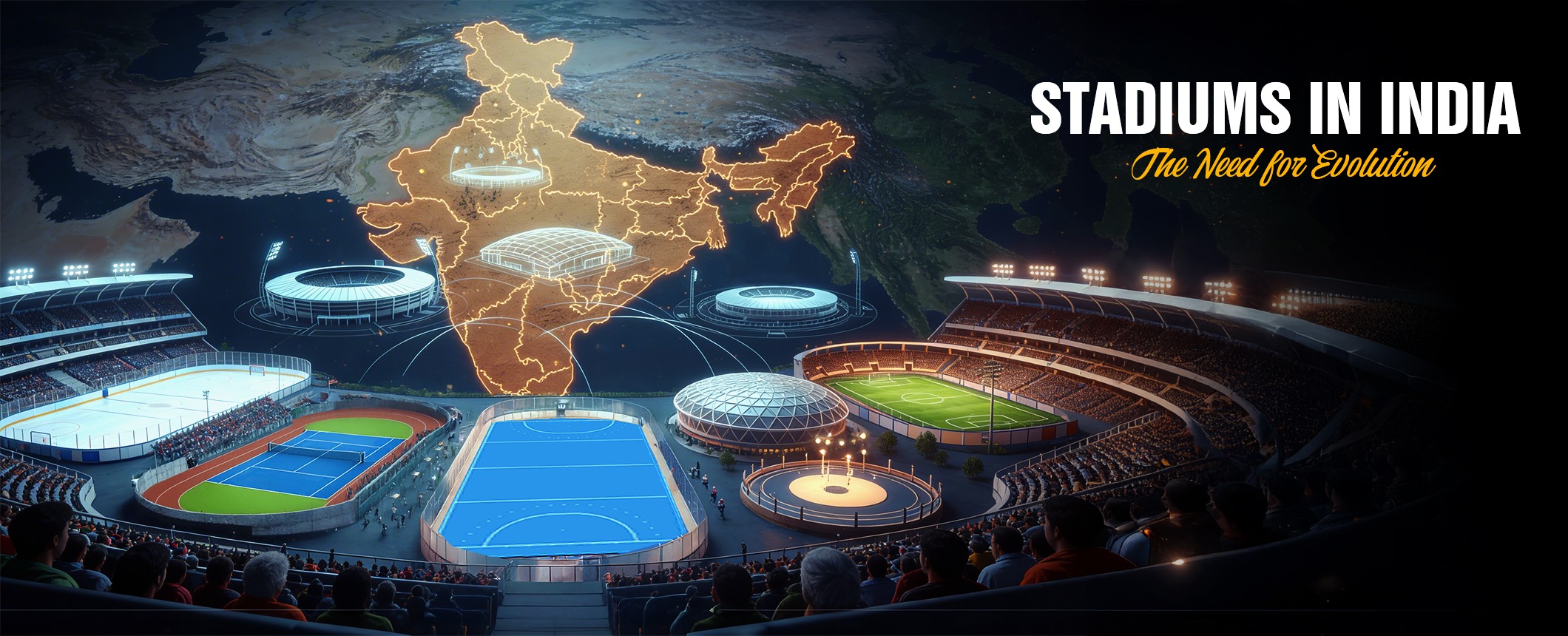
India’s infrastructure and policy landscape is shaping into a investment-driven ecosystem. The sports infrastructure market is currently valued at USD 2.7 billion (INR 22,950 crore) and is projected to grow at a CAGR of 12–15%.This means that the development can now extend beyond stadiums to include pay-and-play turfs, niche facilities like pickleball courts and futsal arenas, and tech-enabled smart venues.
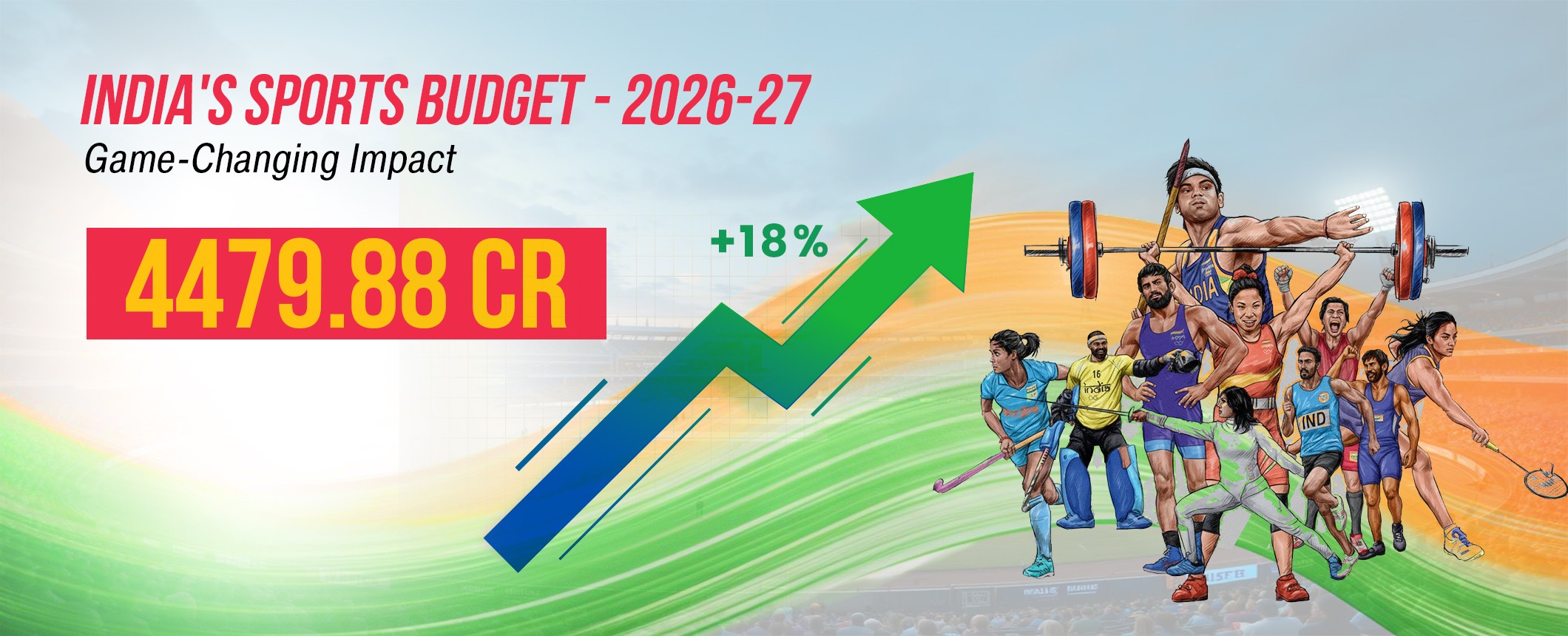
Backed by strong policy frameworks such as the National Sports Policy 2025, and increased government spending, initiatives like Khelo India are expanding grassroots and elite-level access across the country.
Global ambitions like Olympic bids are positioning sport as a driver of economic growth and nation-building. As a result, there is increasing demand for professionals in event and venue management, sports administration, and large-scale development programmes, making this a crucial and expanding career pathway within the industry.
5. Rise of Athlete Economy
Athletes are no longer just performers, but independent brands and business entities. Apart from traditional endorsements, many are now building personal business ventures, engaging in equity-based partnerships, or managing their portfolios through dedicated teams or family offices.This has created a ripple of demand for a wide range of professionals, from sports nutritionists, data analysts to marketers and athlete managers.
The rise of the athlete economy is becoming programmatic than seasonal. Meaning, endorsements are now becoming ‘all-weather’ as opposed to season/event specific, to give a better narrative for retention.
For career aspirants, this signals a clear shift: working in sport today means working around athletes as dynamic enterprises, making this one of the most exciting, stable and rapidly evolving spaces in the industry.
![]()